Thursday, June 29, 2017

Notes On a Poem About Salt Caves


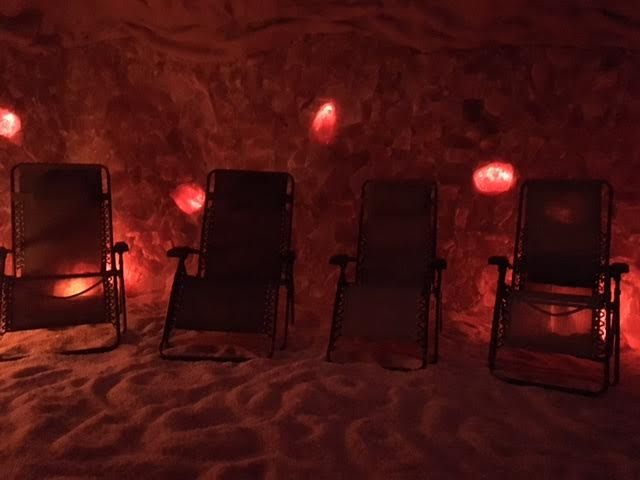
I would never write a poem about a salt cave. Or a "salt den," to be more specific. But if I were to do such a thing I would use many metaphors about the heart.

Something about the ocean being like a big bucket of tears, and when they dry we get all this salt, but since we adulterate our tears with plastic, then our crystalized tears contain those hyper-bits of objects of refuse.

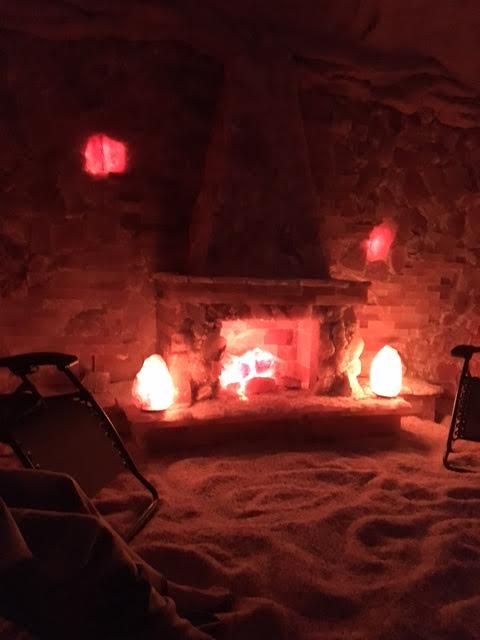
Salt caves grow from rain water drip drip dripping. Don't touch the real drip-stones! Metaphor about being inside a broken heart that grows new hearts. They glow while growing, is how you know they're healthy, ready to try again. And this one is fake--an incubator. A cold hot house.


In the salt cave there are chairs to recline and watch the hearts grow. You can observe the new ones try tiny things, like glowing without consequence. Dig your feet into the tiny rocks of hearts. Strangest beach ever. Beaches inside caves inside a heart inside suburb.

If this were a poem the speaker, The I, would lick the wall. Just once, to test that it was real. The I would grab a handful of tiny heart rocks and eat them, to test that they were real. The I would find both to be truly salty, and comforted by the voice over telling I that salt is antiseptic and hygienic. 

The I would taste limestone, dolomite, marble, and sandstone. The tiny turkeys set to brine. 


Because the thing about salt caves is that they are mainly intended to enhance respiratory function. The light waves break down the salt particulates, releasing them into the air, and breathing them is therapeutic.

But if this were a poem, breathing doesn't matter, because this cave makes hearts. Hearts pump, lungs inflate. These metaphors do not mix. Like oil in salt-water. Don't you dare put oil in your tears. Hearts, young and old, cannot pump oil. Don't even try. Lick the wall again,  look again to see if the pretend camera seems to be connected to an electrical source.


If this was a poem where The I licked everything, The I would experience thirsts. A dried up ocean floor on her tongue, transmutation of teeth into bleached coral, hypoxic saliva glands, sandy esophagus, so forth. 

Too much salt, The I becomes a deer. The deer becomes jerky. The jerky becomes waste. The waste encounters the soil. The soil over salinates. < no I do not like this arc > Plants do not live in soil that is too salty. They die, their spirits wisp away into salt caves, where they make the tubes in the new hearts. 

By god, look at them grow. The I could take at least two more significant betrayals with a heart like that. 


This poem would also use words to measure time in the cave, like: forever, never, weather, treasure, tether, pleasure, leisure, seizure, and now.

Proper drainage is the only way to ensure soil does not over salinate. 

Pronouns include: The I, her, you and them (them is for the hearts. The I does not recognize the singular). 


Viable soil is around 15% salt. Over salted soil is highly acidic-- a ph over 8.5, it might not seem very acidic, but that's a high number for soil. (to compare, cakes are about a 5 in ph level.)

Living, human bodies carry around between 175-200 teaspoons of salt at any given moment. Blood's acidity is just under the 7.5 range. Also pretty basic. (basic like jorts, cochella and cupcake vending machines.)

The ocean ought to have a ph level at 8.2, but it doesn't anymore. (see above regarding jorts, cochella and cupcake vending machines.)

The poem would end with a refusal of The I to make a claim about breathing--the alleged reason for being in a salt cave. Avoiding a bookending of cyborgian plastic sheep dreams. No claims on the pumping out of the ocean into buckets. No.

Instead, The I would conclude with writing that there have been dreams about these glowing hearts. In this fake cave, The I tests some real thoughts about what so many glowing hearts can do. Has decided the answer is much. 

This would be a terrible way to end a poem. More reasons to not write it. 


Monday, June 5, 2017

The Dirt on NaNoWriMo


As I approached finishing my dissertation, I was afraid of what google told me was the "post-dissertation blues," or the "post-dissertation slump." This is when you experience a very real period of depression after finishing your dissertation. To keep that at bay I decided to run a NaNoWriMo.

[And O! My cute writing-nook! Deer eats dangling participles! Or so I tell myself sometimes.]


Guiding principle of Nanowrimo: during set months of Nov. and/or April, write 1500 words a day and produce a 50,000 word, draft of a novel. Bellow are the top ten things I learned about writing, and myself as a writer, from this experiment.

While a gold-standard for blogs is not to pass 500 words a post, I'm breaking that limit and using a word count for what I averaged daily (about 1,750). And yeah, the NaNoWriMo website echoes a lot of what I say, but my list has lovely and important pictures.

1. You are doing a fine job...

I don't write creatively. This is a fiction I hold as an absolute truth of my identity. In order to, publically, both write a novel *and* not be a fiction writer required some mental gymnastics. The good thing about having a time crunch is I didn't have a lot of time, or energy, for Artist's Laments.

The faded scrap of paper (framed above) hangs out by my desk. A while ago, a disgruntled student took to ratemyprofessor, on the offensive. The course was in session, and I ran a kind of mid-term evaluation.


I ask all students to, each, note some areas where the course might need fixing. I leave the room, mote it be Anonymous! Eventually, they invite me back in. There is one piece of paper on the front desk. Of course I cry! And frame it!

When we're being mindful, we're usually doing better than we think. I did this, you can do this, and it doesn't have to be as terrible as one might predict!

2. Write Through The Charlie Horses.

It may have been bad planning to try this during May--historically the most challenging month for me. May includes the anniversary of my dad's death, a week later my birthday, then mother's day. And all the graduations. There are many feels, as the kids say, this month.


When I started getting weepy about missing my dad, I swallowed it and wrote extra hard. I will use this time to salute him by writing the kind of speculative fiction he would have wanted to read. [Note for revisions: in my novel America pulls out of the Paris Agreement in 2020. Must change timeline.]

3. Explore New Writing Places!

I spent a lot of time not at home this month. Necessity being the mother of exploration, many quests were taken to find places I could write. I found five places I adopted as new writing spots,  four dear friends from the past, three lake-views, two fireplaces, and one waitress that kept me in free coffee.

In past-present-real-time, I'm writing this post from Mirbeau in Skaneateles. It's lovely. I admire the woman that brought cans of Fresca in her purse so she could have the cocktail she wanted. I will be her in 15 years (only with a jar of a certain kind of olive juice).


The Sherwood Inn, kept me in free coffee while it stormed outside (see that coffee above!). I watched the angry lake swell, and hit things. When writing a story that involves sea travel, and angry oceans, it helped. Kismet! (which I don't believe in.)

4. Accept the Kindnesses of Strangers! (Sometimes.)

In the quest to find new writing spots, I spent a full workday parked at the bar of Empire in Cazenovia. A passing conversation with a gentleman about the book I had with me changed the course of my narrative.

Of course I know that people do this, in our lives. One word, or one look at the right time or place can change an entire internal universe. But since I am not a fiction writer, I didn't know that it worked on writing, too. (Does anyone believe me yet? I am not a writer!)


(Featured in the image above to the left of the 'puter: I also started using a Panda Planner this month. I personally endorse this product.)

If you know who you are, thank you. If you think it might be you, and aren't sure, take it. If you want it to be you, but you sincerely think it isn't, make it be you. If it couldn't have been you.... it could still be, try anyway.

5. Rely On Friends! Always!

This is true for all things writing--for me anyway. I do my best work in social pomodoros. I am not a creative genius that needs isolation. I am a dirty, little gym-rat of a writer that needs a dirty, little gym-buddy. Most of the novel was written in social poms, either F2F (see image below), or remotely (over skype, fb msger, gchat, or texting. you know who you are by your platform.).


And I can't say this enough: pomodoros made this project possible. Just like my dissertation. Just like every article or chapter I've published. Or most blog posts, for that matter. (I am not a productive beast. Pomodoros just work.)

6. Over-share!

This comes straight from the NaNoWriMo advice: tell everyone what you're doing, share the details, tell your family you're a novelist, share share share. So I did. Everyday when I woke up I told my dog. I told my mom. I kinda told someone on my dissertation committee (bless her for not saying one word one way or the other).

I told the internet.
                                And then I told T.C. Boyle.


I told other novelists that I have ir/regular twitter-correspondence with, but if you tell T.C. Boyle, that means it's really real. And then he'll tell you micro-stories about saxophones and memory. And then you'll send him more pictures of your dog. And you still won't understand the egg.

7. Over-write!

Did you know that everyone's allergies this year are particularly bad because of excessive Oak pollen? At least in the northeast.  It's because the winter was too mild. Due to climate change. [ahem, this May or May Not be a plot point in the novel. May.]


As seen in the disaster picture above, pollen tried to eat my face and debilitated me for a couple days. At first I feared it was the dissertation blues catching up with me--but then I took Allegra and was able to move my face again. I'm not *that kind of doctor* so take this with a pot of flowering tea.

Over-write whenever you can. Shit happens. Pollen happens. Life happens. Stay ahead of it.

8. Over-lap What You Know!

Writing what you know is a cliché that we fight with in teaching. Try to tell them Coetzee's line about how once you know the other you have killed them. Try to tell them things must be grounded in a critical conversation. These two are at odds--but they aren't.

I've transitioned into thinking about overlapping what you know in the thinking and the writing. And the other skills.

O help me internet, is there a word for this? While writing I rarely listen to music I know how play on the piano, because my brain flips muscle memory, and I start playing chords or running melodies instead of typing words. And sometimes when I'm stuck on a word-issue, I put the laptop on my piano, and the words slip out faster than I could sing them. Painting and writing is another post.

What semiotic synesthesia is this? Do I need to email Oliver Sacks' students? Or get a CAT scan?

Different parts of my brain are doing things when they shouldn't, and sometimes it helps. I don't know why, but the overlap is real.

And then, when you can't overlap, or write what you know, because you are not yet an expert on everything......

9. Ask For Help!!!

There is a lot of science in my novel--some of which I know very well (perennial plants, microbial soil structure, and the flora and fauna of this region), a little bit (climate change specifics, Operation Zeus, microprocessor fabrication), and then not at all (birds, and biological nanotechnology).

I made the choice not to google anything (except for the biology of why our palms sweat. oops.). I wanted to do the thing people did before--ask people that knew more than the asker! I learned things google wouldn't have told me. 

Google lets you determine the rabbit holes you explore. Experts throw you down an exquisite rabbit hole they have constructed just for you.


Experts explain why you need diamorphic birds, even if the plot point stays between you and the text. Experts tell you why you must keep what feels like a heavy handed plot device, because your hands aren't as heavy as you think. You are doing just fine, you must overshare. That is how you learn.

 10. It's NOT Personal, It's Business!

My least favorite part of this project was killing my protagonist. I made the choice to do it in the first sentence, so I wouldn't be able to back out. Then, mid month, I wrote the actual death (which was near the end of the structure of the novel). It sucked. I didn't want to. I hated it. I did it at night.*


*This is significant because I have a hard rule of no writing after dinner unless it's an emergency. (How do I get anything done? Pomodoros!)

I was stuck until I did this. Turns out that writing fiction is a lot like every other thing you do: you waste a lot of energy hating the thing that is pending, and if you just do the thing you hate sooner, everything else gets easier. The Stanford Marshmallow Experiment. Google it.


I'm at the end of the project/month. I can look back and say that I absolutely didn't get the post-dissertation blues. It helps that I am fortunate to have a landed a post-doc that I, excitedly, have on the horizon (not everyone finishing a dis has that. I know. Survivor's Guilt sucks like Imposter Syndrome.). [Of course once I land at GIT I'm going to push to run a campus-wide NaNo' in April.]

It also felt good to stretch my creative-problem-solving-brain-muscles in ways that I haven't in a while. With my specific dissertation, the last year (year 3) was dedicated to very specific revisions--I really wasn't producing new thoughts. My neuroplasticity and brain-chemistry feel changed in doing a marathon of new thinking. 


(Above: Me at Turning Stone post graduation gift spa-day. I got a massage, drank a huge boozy-milkshake, and gambled no dollars. Word count for the day: Zero.)


I loved every bit of this project. It's a draft, it isn't done. So what's next? Mid-June I head to #Oxyfood2017 to give a paper on FLOTUS and neoliberal pica (aka eating diamonds). Then comes July, and there's a NaNo writing camp! I'm gonna do it! Finish this novel! Send out book proposals! Yeah, I'll be preparing for an interstate move.

Why not? Seriously, why not?
Join me.                        
                          Why Not?

Monday, May 8, 2017

The Ground Beneath Her Feet 1/2


Palimpsest

"The word "palimpsest" derives from the Latin palimpsestus, which derives from the Ancient Greek παλίμψηστος (palímpsēstos, "again scraped"),a compound word that literary means "scraped clean and ready to be used again". The Ancient Greeks used wax-coated tablets, like scratch-pads, to write on with a stylus, and to erase the writing by smoothing the wax surface and write again; this practice was adopted by Ancient Romans, who wrote (literally scratched on letters) on wax-coated tablets, which were reuseable; Cicero's use of the term "palimpsest" confirms such a practice."

By choice and by not bodies and identities are palimpsestic. I announce this, proudly, I am an newly minted Doctor. Dr. Darcy Mullen. PhD. Doctor me. My name is rewritten. I practice my signature. I fill notebooks with hearts around it (no I don’t). I’ve been advised to do something special to mark this.

Or else I will have nightmares for the rest of my life. In a way to commemorate this new name to write—new thing from writing, new writing of me—I make plans to write on myself. More specifically a tattoo artist will write on me and edit the palimpsest of my body. We begin June 20.

I have scars on my arm from a reaction to a medication in my twenties. I hate them. I hate the story they tell. I hate what I imagine people thinking when they see them. Scars are a thing we don’t talk well about. Dr. Darcy decided to edit and revise how my palimpsest of skin is in this world.

Dr. Me didn’t want to feel embarrassed about the history on her body, so she made a choice changing the history. History is, after all, written by the victors. That is how I will come to have images from Italio Calvino’s _Invisible Cities_ on me.

This copy, this cover, was from the first one I read. It’s followed me through half a dozen moves. The same copy came with me to Venice.

I have another tattoo; roughly the size of Minnesota, and a work in progress for 15 years. It is rewritten, and added to often. Many hands in its design and work. I’ve been told it looks like a beanstalk, a wild fire, a demented butterfly, and/or a large vagina. I call it the mothership for all tramp-stamps.

Multnomah County Library (Oregon), @MultCulLib,  seems to still be doing this creative and thoughtful thing: tweet them a picture of your tattoo and they give you a book recommendation. #Books4Tats I sent an image of the mothership, and after what careful consideration (I think), they recommended Rushdie’s _The Ground Beneath Her Feet_.

I have mixed feelings on Rushdie’s writing, but I firmly love the idea of connecting what is written on one’s body with what one might read. Now, dear Portland library, what do you recommend for this tattoo?  

After reading Padma Lakshmi’s _Love, Loss, and What We Ate_ I have mixed feelings on this particular book. After actually reading this particular book I will say that I’m glad I added it into my 4080 books .  

As I think about the own ground beneath my feet, traveling on it with my new name, and watching it change (as the EPA is being rewritten, as my scars are definitely a bullshit preexisting condition), I think about what _Invisible Cities_ tells me about stasis and change. Memory, desire, place and space rewrite themselves. This is a reminder I wanted written over my pulse and under my clothes are as I, name rewritten, move around and forward in this world.

Monday, April 17, 2017

Ashes to Ashes (dirt to dirt)


Reflecting on Easter and one’s own mortality is best left to others, probably. I’ve talked to a lot of healthy, young-enough, people recently about their thoughts on death as it figures in their own life-cycles. I don’t often have these talks with my friends. I wish I knew more about what they thought.  
Maybe I should have them more. For a culture so into zombies we don't often say meaningful things about death as a part of life until we are touched by a loss. One friend told me that she doesn’t like to think about it, so she doesn’t, except when something reminds her of it (like me asking).
The thing that bothers her the most are ideas regarding quantity over quality, like “you have 40 years left.” I brought it up because of a piece I saw on lithub that gives an estimate of how many more books one has left to read in their lifetime.
I’m a few weeks from my 35th birthday, so I fit nicely into the “female, 35 year old, Super Reader” category. With a life expectancy of 86, and an average of 80 books a year, that leaves me 4080 books before I die. 80 a year is nothing. Steven King has written 83 books! This is a wake up call to be more discerning and deliberate about what I read.
4080 is assuming a few things—that I’ll make it to 86/that I won’t live past 86, and that my actual average of 150.33333 tapers off. The taper makes sense. I’d expect that free time is going to shrink (career)/expand (retirement) in unpredictable ways. Now, the task is tapering my reading wish-list. 
For example, one New Year's resolution was to read all the books that were significant in Mad Men. I wouldn’t have read Lady Chatterly’s Lover if not for that project (weird sex flowers, but glad I read it). Now, realistically thinking that I have roughly 4000 books left in my life (if I’m lucky!), I have no way to justify Mad Men’s Ann Rand’s Atlas Shrugged. Gbye book!
This is not as easy as M Kondo’s ‘hold it and see if it brings you joy,’ I don’t think. Some have been recommended by dear friends and it was a struggle to get into them. I’m looking at you Master and Margarita. I did not feel joy every time I held you, but I’m glad I did.
This is an opportunity to forgive myself the guilt of books that I’ve been holding onto that I wanted to read because I thought they would be ‘good for me,’ like Spivak’s (now slightly) outdated Death of a Discipline. Gbye Book!
I feel like I need a flowchart to help me figure out what of Everything to read. Birthday gift idea: make me one! Gift me a methodology! It’s a wonderful problem to have, and I’m very lucky if I live to my 80’s. I’m writing this from a place of privilege in many ways.
There are new books all the time. In all likelihood at least half of the books I will read haven’t been written yet. I get such a high from reading the new releases, still in hardcover!, from the library! This is also a lovely thing. And yet….
Here’s the new rule: the first 50 books every year will be ones that do give me that Kondo like joy thing. After 50 books (probably the age, too), I’ll be less discriminating. I’m writing today, at 40 books this year (and at my own 35 mark). The next ten I devote to consciously hold things of joy.  
Of all things to be concerned about with the end of my life the books I read (or how many) is ridiculous. Particularly when juxtaposed with people to love, places to see, problems to fix, dreams to follow and so on. Or when juxtaposed with the amount of death the world sees everyday.

But these things are connected, right? Why we make bucket-lists, why we have holidays to reflect on mortality, why we cry at the news, why we ask our friends if they are organ donors, why we teach, why we protest, why we plant trees, why we recycle, and why we read.  

Monday, February 27, 2017

Pathos Soils Everything


                                                                                                                                           For Eric.

In Robin Schulman’s Eat The City, she gives a fascinating account of the ins-and-outs of food production in NYC. My favorite anecdote is about the time the bodies of bees, and their honey turned, red due to getting into maraschino cherry syrup, and red dye no. 40 in it. My friend, Eric, called this the stuff of horror movies.

My friend Eric says a lot of things, and if you know him you know that this is a good thing. Consider the following exchange. This was following a discussion on the Book Parties I have. Eric, a voracious reader, always wants book recommendations, and I promised a blog post for him on that.


The conditions, clearly: What is Vital/Worth Reading, From My List of 2017, and Based on Nothing More Than My Personal Determination. Cuteness warning, #bookselfies with #souphound to follow.


Here’s the deal about Eric The Reader. He can be picky. That’s putting it gently, he has high standards. He needs books to have formidable, intellectual standards, to push current narrative forms, to stay away from pathos (sentimental, feely-ing, emotions o noes!!!!.... unless it’s Dear Sugar), and a book must keep all the promises it suggests at the beginning.
My recommendations to Eric often fly in the face of the things he likes, because I think I can change him. Sometimes it works (see above example of Dear Sugar. Eric likes Dear Sugar, Eric likes Dear Sugar! (Of course he does, he has a soul!)). Sometimes it doesn't (think Buffering by H. Hart. Boo. I love that book.).


This post isn't just for him, or for that type of reader alone. But these are the highest of the high standards. Take these suggestions seriously!
There have been many “reading lists for surviving 2017” circulating, I can’t do better than those. This is based on “even the pickiest readers should read them based on nothing more than my sheer personal determination.” So, dear Eric, these were the best of the best of my 2016.


  1. A Little Life. Hanya Yanagihara (#5)

2.       The Flame Alphabet. Ben Marcus (#12)

  1. Gold Fame Citrus. Clare Vaye Watkins (#20)
  2. Welcome To Braggsville. T. Geronimo Jackson (#22)

5.       Shadow Tag. Louise Erdrich (#109)


6.       The Heart Goes Last. Margaret Atwood (#133)

  1. Salvage The Bones. Jesmyn Ward (#138)
  2. Zone One. Colson Whitehead (#146)
  3. I’m Supposed to Protect You From All This. Nadja Spiegelman (#147)
  4. The Sellout. Paul Beatty (#152)


Books I’m pretty sure Eric The Reader will automatically love:

The Flame Alphabet. Ben Marcus (#12)

Gold Fame Citrus. Clare Vaye Watkins (#20)

Welcome To Braggsville. T. Geronimo Jackson (#22)

The Heart Goes Last. Margaret Atwood (#133)

Zone One. Colson Whitehead (#146)

The Sellout. Paul Beatty (#152)

Why? They all have formidable intellectual standards, push current narrative forms, they stay the heck away from pathos, and they keep all the promises they suggest at the beginning.  


Books I think Eric should read anyway and he is likely to resist me on:

              A Little Life. Hanya Yanagihara (#5)

              Shadow Tag. Louise Erdrich (#109)

              Salvage The Bones. Jesmyn Ward (#138)

I’m Supposed to Protect You From All This. Nadja Spiegelman (#147)

Why? The pathos. These books abosultly maintain high intellectual standards, push formal boundaries and take themselves very seriously. They also break your heart. No promises to put it back together. So maybe these four books are actually my suggestions of survival-books for 2017.


Eric, my dear, you have a kind soul, and a warm heart. You aren’t a toxic-masculinity-unfeeling-hardass. Yet, you know you aren’t drawn to the stories where Love is a character, or a major plot device. Which is why I think, out of my sheer determination, I posit that you read the last 4 here before the other 6. Sheer Determination!

In conclusion, here’s the painting we made at the last book party—a palimpsest of the book list of 2017. Everyone should have book parties! Wish you could have been there! Love you man.


For the first 100 in the reading list of 2016:


Follow Eric on Twitter @LinkTheorist
Follow the cuteness of #bookselfies with #souphound @FarmsWatson

The other 59 books that followed the first 100 of 2016:

1.     An Untamed State. Roxane Gay
2.     Dept. of Speculation. Jenny Offill
3.     A Spot of Bother. Mark Haddon
4.     We Have Always lived in the Castle
5.     Heavy. The Obesity Crisis in Cultural Context. Helene Shugart
6.     The Post Birthday World. Lionel Shriver
7.     This I Believe II.
8.     Bait and Switch. Barbara Ehrenreich
9.     Shadow Tag. Louise Erdrich
10.  Spark Joy. Marie Kondo.
11.  The Dirt Cure. Maya Shetreat-Klein
12.  Vinegar Girl. Anne Tyler
13.  Secondhand World. Katherine Min
14.  Heartburn. Nora Ephron
15.  The Taming of The Shrew. Shakespeare.
16.  Luka and the Fire of Life. Salman Rushdie
17.  Love Loss and What We Ate. Padma Lakshimi
18.  The Rum Diary. Hunter S. Thompson
19.  Women. Charles Bukowski
20.  I, Etcetera. Susan Sontag
21.  Family Matters. Rohinton Mistry
22.  The Reluctant Fundamentalist. Housin Hamid
23.  Sous Chef. Micheal Gibney
24.  The Giver. Lois Lowry
25.  Go Ask Alice. Anonymous
26.  The Body in The Library. Agatha Christie
27.  The Red House. Mark Haddon
28.  Sons and Daughters of Ease and Plenty. Ramona Ausubel
29.  The Mandibles: A Family 2029-2047. Lionel Shriver
30.  The Hitchhikers Guide to The Galaxy. Douglas Adams
31.  Dear Mr. M. Herman Koch
32.  Little Nothing. Marisa Sliver
33.  The Heart Goes Last. Margaret Atwood
34.  After The Plague. T. C. Boyle
35.  The Cat’s Table. Michael Ondaatje
36.  Eat Pray Love Made Me Do it.
37.  An Artist Of The Floating World. Kazuo Ishiguro
38.  Salvage The Bones. Jesmyn Ward
39.  An Arsonist’s Guide to Writer’s Homes in New England. Brock Clarke
40.  The Underground Railroad. Colson Whitehead
41.  Truth, Justice, and the American Whote
42.  We Should All Be Feminists. Chimamanda Ngozi Adichie
43.  Tenth of December. George Saunders.
44.  A Room of One’s Own. Virginia Woolf
45.  Trans: a Memoir. Juliet Jacques
46.  Zone One. Colson Whitehead
47.  I’m Supposed to Protect You From All This. Nadja Spiegelman
48.  Nutshell. Ian McEwan
49.  Buffering. Hannah Hart
50.  Troubling Love. Elena Farrante
51.  The Wonder. Emma Donoghue
52.  The Sellout. Paul Beatty
53.  Hag-Seed. Margaret Atwood
54.  The Fire This Time. Ed. Jesmyn Ward
55.  The Days of Abandonment. Elena Ferrante
56.  Toots in Solitude. John Yount
57.  Flash Fiction. Ed. James Thomas
58.  Lady Chatterly’s Lover. D. H. Lawrence
59.  House of Leaves. Mark Z. Danielewski